Get Duked!
(Film, 2019) A hip hop-led rescore reframing the opening’s shift from tension into chaotic, performative bravado.
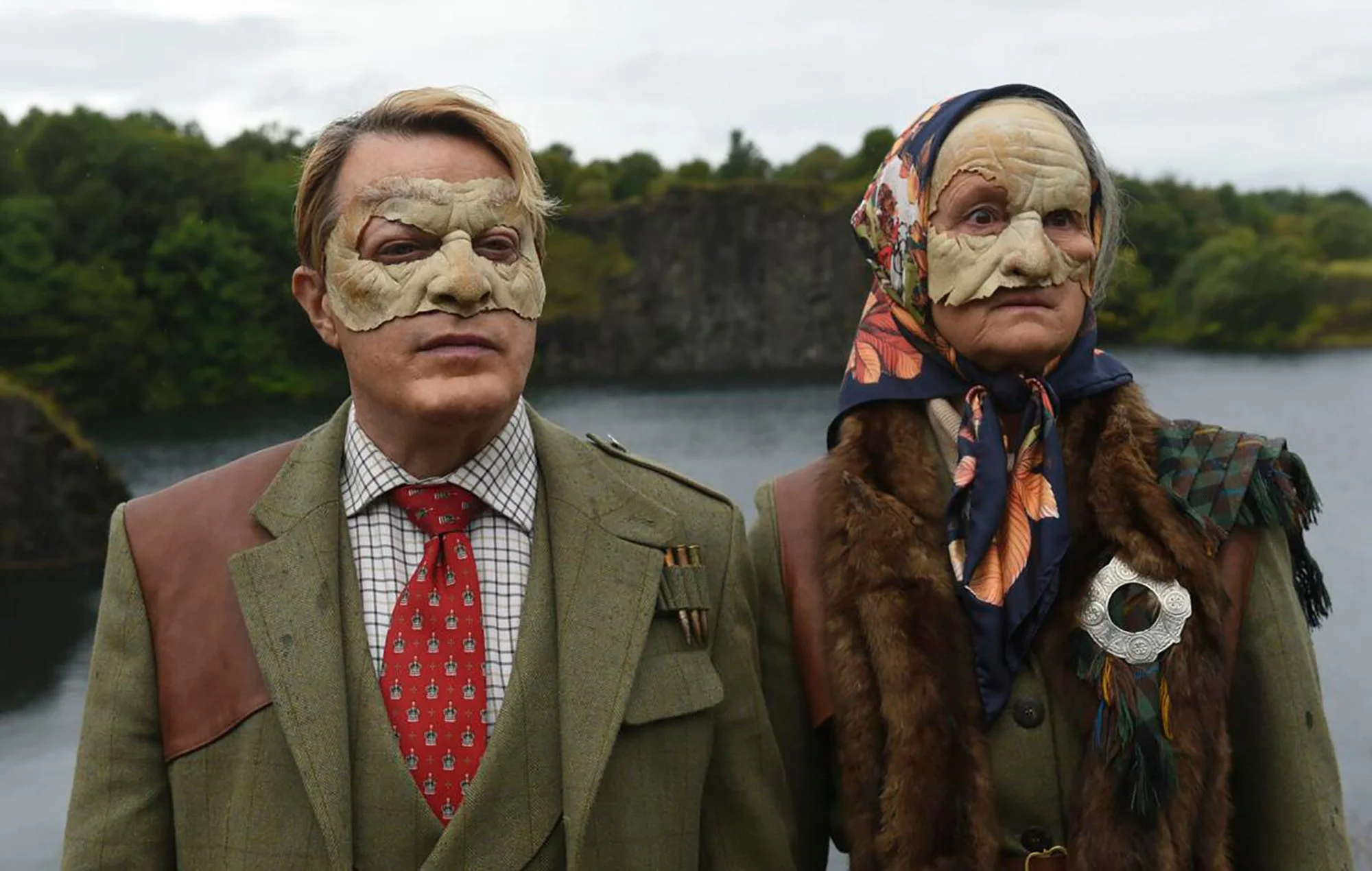
The opening of Get Duked! establishes tone through contrast. It begins with a controlled, almost folkloric sense of threat before undercutting itself with something far more juvenile and chaotic. That transition defines the film’s identity, where tone is shaped as much through irony as it is through contrast, with music often overstating the action on screen.
In the original, Danny Brown’s ‘Ain’t It Funny’ works because it captures that contradiction. Its theatrical, repetitive and slightly unhinged nature allow it to function not just as a cue but as a recurring idea that reflects the characters’ inflated sense of themselves. It also sits in a space that feels distinctive and current, while remaining accessible enough to support a broad audience.
This rescore retains that balance of cultural credibility and sync appeal, grounded in hip hop while shifting the palette toward a more UK-led perspective.
This opening cue also carries an element of foreshadowing. By establishing the dynamic early between perceived confidence and actual control, the music is allowed to function as a subtle narrative thread. As the story progresses, that same tension between bravado and vulnerability continues to appear, making the opening feel less like a standalone moment and more like a sign of what’s to come, especially when the cue briefly returns as the characters are first introduced to the Duke…
The focus here is on how that language can be reinterpreted without losing its core function, shifting the palette toward a UK context while remaining rooted in hip hop. Each selection is designed to:
Tease intros as the teacher’s speech finishes, with the beat hitting hard on the cut to titles
Balance cultural credibility with broader sync appeal
Support fast editing across titles and montage
Leave space for diegetic texture and SFX
Sustain energy and character
Cut decisively to silence on the door slam
The following tracks present three distinct approaches to the same sequence.

Primary Selection: Momentum / Escalation
Interplanetary Criminal - Races (ft. Blanco)
The lead recommendation. Races introduces immediate forward motion, replacing the teacher’s controlled tension with something more reactive and unstable. It has a brief, weighty introduction that leads into the title sequence organically.
Its twitchy, propulsive rhythm drives the title animation and minibus montage, with plenty of edit points for visual gags and character moments to land rhythmically while still feeling loose and spontaneous. The track’s energy never fully settles, creating the impression that things could unravel at any point, mirroring the boys’ on screen behaviour and projected confidence. The blend of UK club production and rap vocal grounds the sequence in a contemporary British hip hop space, maintaining the genre’s role as a driver of tone and movement.
The production leaves enough space for the opening credit’s sound effects, while the breakdown and final moments of the track provide a few good options for a closing button where the cue is cut abruptly on the teacher’s door slam, returning the scene to silence and reintroducing a sense of reality.
-
Master: Sony Music Entertainment UK
Publishing: Sentric Music Ltd (100% control; writers: Eduardo Joshua Emmanuel Pinto Joao, Zachary Koa Bruce)
Control: Major (Master), Independent (Publishing)
Notes: Publishing fully administered by Sentric, master held by Sony. Overall structure is clean and well-defined.
Alt Selection: Satire / Cultural Specificity
KAM-BU - Eton Mess
A more explicitly UK interpretation. Eton Mess introduces a layer of satire and class awareness with lyrics which align to the film’s underlying themes while still maintaining a loose, character-driven energy. Like the original Danny Brown cue, tone and attitude are carried here through delivery as much as instrumentation.
The track has a brief introduction, with the beat entering hard on the cut, carrying through the montage with a groove that supports pacing without dominating it. It carries a simmering, unpolished energy both lyrically and in terms of production, with slightly off-centre delivery and a loopable outro to provide editing flexibility.
Where Races leans into instability, Eton Mess brings a more controlled, self-serious tone. But rather than matching the boys’ behaviour, it creates irony through contrast. It suggests authority and intent, while the visuals expose the opposite, emphasising the gap between how the characters see themselves and how they actually operate.
-
Master: OFF GRID (under exclusive licence to Believe)
Publishing: Sony Music Publishing / Sentric Music Ltd (two writers: James Edward Jacob, Kamron Anthony Roberts)
Control: Independent (Master), Major / Independent (Publishing)
Notes: Recording owned by OFF GRID with distribution and likely licensing handled via Believe. Not located on PPL at time of search, clearance would likely be routed via Believe or artist management. Split publishing across Sony and Sentric, requiring clearance from both parties.

Conceptual Alt: Performed Bravado
Action Bronson - Falconry (ft. Meyhem Lauren + Big Body Bes)
A deliberate tonal outlier that remains rooted in hip hop. Falconry represents the boys’ inflated self-image, exaggerating their sense of confidence through a heightened, theatrical delivery.
Retaining a US hip hop track preserves a connection to the original film’s tonal DNA, while shifting its function. Rather than reflecting reality, this track operates as a projection of how the characters perceive themselves at their most confident.
Falconry’s almost whimsical production and lyrical delivery act as the main drivers behind the strong contrast between sound and image. The track’s bravado and lyrical content completely overstate the situation, ironically reframing the montage as something closer to delusion, providing a strong perspective into the character of Get Duked!’s protagonists.
The opening section provides enough impact with a slew of strong ad-libs for a sharp entry from silence, while its looser structure allows for editorial flexibility across the sequence. As with the other selections, it cuts cleanly on the door slam, with plenty of sharp cuts in the track to support that.
-
Master: Warner Music UK Ltd
Publishing: Sony Music Publishing / Universal Music Publishing and associated partners (multi-writer split)
Control: Major (Master), Major (Publishing)
Notes: Major label master with complex, multi-party publishing typical of US hip hop releases. Clearance requires coordination across multiple rights holders.
Final thoughts
The opening sequence relies on contrast, moving from threat into comedy, from control into chaos, and from silence into noise before cutting back again.
Each selection approaches that transition through a different lens:
Races emphasises instability and forward motion
Eton Mess introduces satire and cultural specificity
Falconry reframes the sequence through character perspective and performed confidence
The use of hip hop here not only defines tone but subtly foreshadows the film’s trajectory, where confidence repeatedly gives way to vulnerability. At the same time, each selection sits within a space that balances credibility with accessibility maintaining the kind of sync appeal that allows the music to resonate beyond the scene itself. While the palette leans UK, it remains connected to a broader hip hop language, allowing for contrast and irony which worked so effectively in the original.
Together, they demonstrate how music can define not just the energy of a scene, but the perspective through which it is understood.